
WELCOME BONUS 300%
UP TO €2000 + 100
FREE SPINS
UP TO €2000 + 100
FREE SPINS
Home → Games
Casino games at Slotuna
Read Statistics of Last 500 Rounds Correctly
The European Roulette variant offers a constant house edge of 2.70% across all bet types, driven by its 37 sectors including the single zero. This mathematical consistency ensures that wagers on Red or Black yield the same 1:1 payout ratio as complex bets like Corners paying 8:1, unlike the American version which doubles the casino advantage to 5.26%. Consequently, players betting €10 per spin face an expected loss of €0.27 over the long run, a figure significantly lower than the American wheel's higher volatility.
Blackjack utilizing six decks with standard rules provides a superior theoretical return, achieving an RTP of 99.54% when the dealer stands on Soft 17. The implementation of Double After Split and surrender options further reduces the house edge to just 0.46%, assuming strict adherence to basic strategy. This efficiency contrasts sharply with insurance side bets, which carry a steep 7.47% disadvantage and should be avoided by rational players seeking optimal returns.
Video Poker Jacks or Better in the 9/6 full pay configuration matches the blackjack RTP at 99.54% through a specific payout structure for high hands. A Royal Flush pays 800 coins for a single wager but jumps to 4,000 coins only when the maximum five-coin bet is placed. Players must therefore deposit sufficient funds to cover these maximum stakes to realize the advertised statistical advantage, as underbetting drastically lowers the effective return.
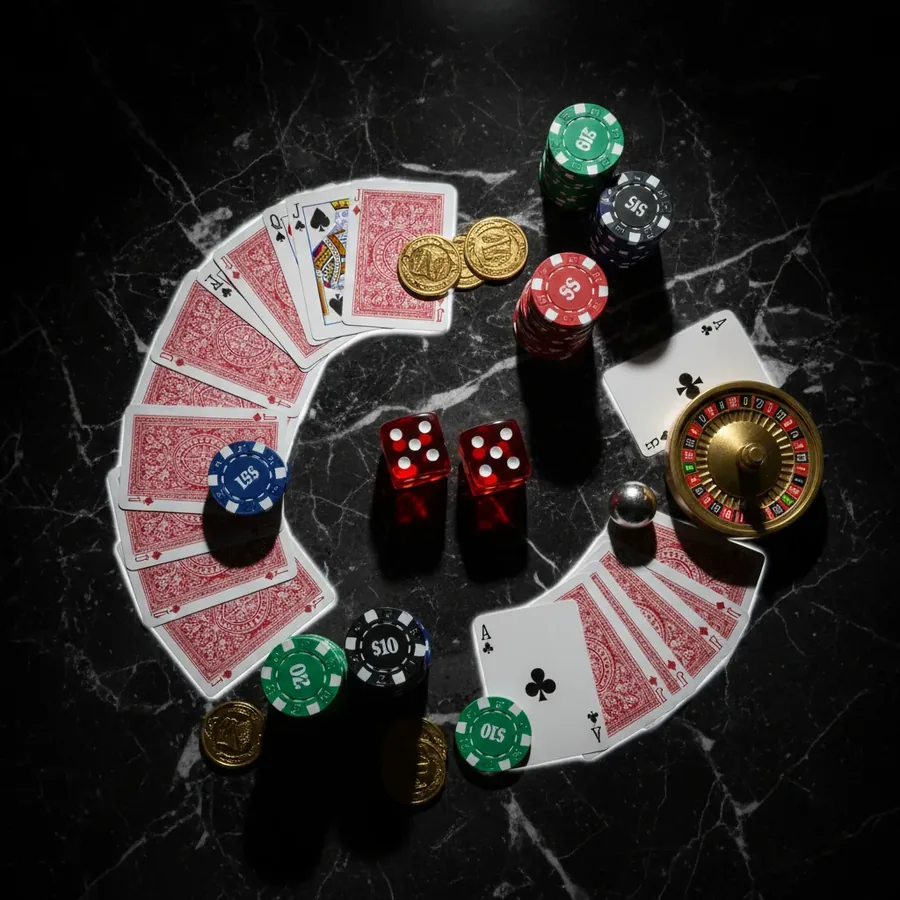
Double Down: Doubling Your Bet After Two Cards
The ability to double down after splitting allows players to increase their exposure in favorable situations, improving the overall game RTP by approximately 0.14 percentage points. This rule modification effectively shifts the mathematical balance slightly in the player's favor compared to games restricting doubling to only the initial two cards. For a €10 base bet, this option permits a subsequent €20 wager, potentially yielding a €20 profit if the hand wins against the dealer.
Resplitting Aces provides another marginal improvement to the player's odds, reducing the house edge by roughly 0.08 percentage points by allowing four separate hands from one pair. While valuable, this benefit is often counteracted by restrictions such as hitting soft 17, which increases the casino advantage by 0.22 percentage points. The net effect depends on the specific combination of rules applied at the table, requiring careful scrutiny of the game conditions before playing.
Standard doubling rules permit increasing the bet to exactly twice the original amount when holding any two-card total, offering flexibility in managing bankroll variance. Unlike split hands where additional cards are limited, doubled hands receive only one final card, capping the potential profit on that specific wager. This limitation means that while the risk doubles, the reward remains fixed at 1:1 for standard wins, maintaining the fundamental risk-reward ratio of the base game.
Martingale Fails After 8 Rounds at Table Limit
Applying the Martingale strategy to European Roulette involves doubling the bet after each loss on even-money outcomes like Red or Black, aiming to recover previous losses with a single win. Starting with a €10 base stake, eight consecutive losses require the ninth bet to reach €2,560, assuming no table limits interfere with the progression. This exponential growth quickly exhausts typical bankrolls, making the system mathematically unsustainable despite the perceived safety of 1:1 payouts.
The fixed house edge of 2.70% on European Roulette remains unaffected by betting systems, meaning the expected value of each spin stays negative regardless of stake size. A sequence of eight losses results in a cumulative deficit of €510, calculated as the sum of bets from €10 up to €1,280 before the recovery attempt. No progression can alter the underlying probability, as each spin is an independent event with the same 2.70% disadvantage for the player.
Table limits imposed by casinos act as the ultimate barrier to progressive betting strategies, preventing the necessary bet sizes required to cover large losing streaks. If a table has a maximum limit of €2,000, a player starting at €10 cannot place the eighth doubling bet of €2,560, rendering the strategy useless after seven losses. This structural constraint ensures that the casino maintains its mathematical advantage indefinitely, as players cannot infinitely scale their wagers.
Sic Bo Pays from 1:1 to 180:1
Sic Bo offers a wide range of payouts for specific dice combinations, with Single Number bets returning 1:1 to 3:1 depending on the number of matching dice. These bets provide the lowest house edge in the game at 7.87%, making them the most statistically sound option for players seeking better returns. In contrast, Specific Double bets carry a much higher disadvantage of 18.52%, despite paying 10:1, due to the increased difficulty of predicting exact pairs.
The highest payout in Sic Bo comes from betting on a Specific Triple, which rewards players at 180:1 if all three dice show the same predetermined number. This extreme multiplier corresponds to a house edge of 16.20%, reflecting the low probability of three identical dice appearing simultaneously. Such high-variance bets are suitable only for entertainment purposes, as they significantly reduce the expected return compared to safer Single Number wagers.
Any Triple bets offer a middle ground with a payout of 30:1 and a house edge of 13.89%, covering all possible triple combinations rather than a specific one. Two-dice combo bets pay 5:1 but suffer from a 16.67% disadvantage, placing them among the less favorable options on the board. Players should prioritize bets with edges below 10% to maximize their chances of retaining their bankroll over extended play sessions.
Three Roulette Variants, Three House Edges Compared
European Roulette features a single zero pocket among 37 numbers, establishing a consistent house edge of 2.70% for all wager types, from Straight bets paying 35:1 to simple Chance bets paying 1:1. This structure provides a balanced risk profile where the casino retains a small, predictable portion of every euro wagered, regardless of the chosen betting pattern. Players benefit from this lower edge compared to American variants, as it extends playing time and improves long-term expectations.
American Roulette introduces a second zero pocket, creating 38 sectors and doubling the casino advantage to a house edge of 5.26% across all bets. Although the payout ratios remain identical to European Roulette, with Straight bets still paying 35:1, the additional green pocket significantly increases the frequency of losses. This structural difference makes American Roulette a less favorable choice for players prioritizing mathematical efficiency and bankroll preservation.
French Roulette shares the same single-zero wheel as the European variant but historically includes rules like La Partage that refund half bets on even-money losses. However, without these rules applying to inner bets, the house edge remains at 2.70% for all wagers, mirroring the European standard. The absence of special refunds for inside bets like Corners or Streets means players face the same 2.70% disadvantage as in European games, eliminating any potential advantage from the French label alone.
Game categories at a glance
| Category | Examples | Stakes From | Highlight |
|---|---|---|---|
| Slots | Fire Joker, Immortal Romance, Big Bass Bonanza | 0,10 EUR | thousands of titles |
| Table games | Roulette, Blackjack, Baccarat | 0,50 EUR | classic rules |
| Live casino | Sweet Bonanza CandyLand, Lightning Roulette | 0,20 EUR | real dealers |
| Jackpot games | Mega Moolah, Divine Fortune, Age of the Gods | 0,20 EUR | progressive pools |
| Instant games | Aviator, Plinko, Mines | 0,10 EUR | fast rounds |
| Video poker | Jacks or Better, Deuces Wild | 0,25 EUR | strategy based |
Before sitting down: check table bet limits
Tischspiel-Mathematik defines the mathematical framework for live dealer tables, where game contribution to bonus turnover is set at 10 percent. This rate applies to all table games under the 300% welcome bonus up to €2,000 plus 100 free spins terms. Players must wager a significant amount before withdrawing funds derived from these low-contribution games.
The minimum bet on Blackjack with 6 decks and S17 rules typically starts at 1 euro, while high-limit Craps Pass Line bets may exceed 100 euros per roll. The house edge varies from 0.46 percent in optimal Video Poker to 5.26 percent in American Roulette. These figures dictate how quickly the required turnover accumulates during live sessions.
Side bets like Insurance carry a separate 7.47 percent house edge, drastically reducing expected value compared to the main game. A standard Blackjack hand pays 1:1, whereas Insurance pays 2:1 if the dealer has a ten-value hole card. Ignoring these limits can lead to rapid depletion of the bankroll before meeting wagering requirements.
Straight 35:1 Against the Chance of 1 in 37
European Roulette features 37 sectors including a single zero, offering a straight bet payout of 35:1 against a 1 in 37 probability. The resulting house edge is exactly 2.70 percent, meaning the casino retains this fraction of all wagers over time. This edge remains constant across all bet types on the European wheel layout.
In contrast, American Roulette contains 38 sectors with both 0 and 00, doubling the house advantage to 5.26 percent for identical payouts. A straight bet still pays 35:1, but the odds of winning drop to 1 in 38. This structural difference makes European wheels mathematically superior for players seeking lower variance.
French Roulette shares the 37-sector wheel but lacks La Partage or En Prison rules for inside bets, keeping the edge at 2.70 percent. Outside bets like Red/Black pay 1:1, while corner bets pay 8:1. Without special refund rules, the player faces the same mathematical disadvantage as in standard European versions.
Hold or discard five cards: the decision
Video Poker Jacks or Better 9/6 offers a theoretical return of 99.54 percent when played with optimal strategy using maximum coins. The Royal Flush pays 800 coins normally, jumping to 4000 for a five-coin bet, which drives this high RTP. Deviating from perfect play significantly reduces the long-term expectation.
Deuces Wild Not So Ugly Ducks provides an even higher RTP of 99.73 percent due to wild cards replacing any rank. Five of a Kind pays 16 units, while Four Deuces awards 200 units for natural hands. The presence of wilds alters standard poker hand rankings and strategic decisions substantially.
The house edge for Jacks or Better sits at just 0.46 percent, making it one of the most favorable casino games available. Standard deviation of 4.42 indicates high volatility, requiring a large bankroll to withstand losing streaks. Players must master complex hold/discard decisions to achieve these returns consistently.
When to Surrender 16 vs 10?
Late Surrender allows players to forfeit half their bet after the dealer checks for blackjack, improving RTP by approximately 0.08 percentage points. This rule modifier reduces the house edge slightly but does not eliminate the negative expectation entirely. It is a valuable tool when facing strong dealer upcards.
Against a dealer ten, holding a hard 16 is statistically inferior to surrendering in most multi-deck shoe games. The player loses roughly half the bet immediately rather than risking the entire stake on a likely losing outcome. This decision minimizes long-term losses in unfavorable situations.
Early Surrender is far more valuable, reducing the edge by up to 0.6 percentage points, but it is extremely rare in modern casinos. Most live dealer platforms only offer late surrender after the dealer peeks for blackjack. Players should verify specific table rules before placing bets to ensure this option is available.
Soft 17: the Ace counts 11 or 1
When the dealer hits on soft 17, the house edge increases by 0.22 percentage points compared to standing on all 17s. This rule change forces the dealer to take another card, potentially busting more often but also improving their final hand strength. It negatively impacts the player's expected return significantly.
Resplitting Aces improves the player's position by 0.08 percentage points, allowing multiple attempts to improve weak starting hands. Doubling after split adds another 0.14 percentage points of value by enabling larger bets on favorable moments. These rules collectively shift the advantage slightly toward the player.
Using six decks instead of eight reduces the house edge by about 0.02 percentage points due to better card distribution probabilities. The dealer stands on soft 17 in many premium tables, offering the best possible conditions for basic strategy players. Combining these rules yields the lowest achievable house edge in blackjack.
37 vs. 38 Sectors: One Zero Difference
European Roulette utilizes a wheel with 37 sectors, resulting in a house edge of 2.70% and an RTP of 97.30%. American Roulette expands this layout to 38 sectors by adding a double zero, which doubles the house edge to 5.26% and lowers the RTP to 94.74%. This additional sector directly reduces the player's theoretical return over the long term.
Payout structures remain identical across both variants, with Straight bets paying 35:1 and Split bets paying 17:1 regardless of the wheel type. The mathematical difference lies solely in the probability of winning each bet due to the increased number of possible outcomes on the American wheel. Players betting on Red or Black face a 47.37% win rate on European wheels versus 46.32% on American wheels.
The choice of wheel variant dictates the cost of play, with the American version costing approximately 2.56 percentage points more per wager than its European counterpart. A €100 stake loses €2.70 on average in European Roulette but €5.26 in American Roulette. Selecting the single-zero wheel preserves more capital for extended gameplay sessions.
Keno and Bingo with RTP Between 92 and 95
Baccarat Tie bets offer an RTP of 95.16% with a house edge of 4.84%, despite paying out at 9:1 odds. This payout structure is standard online but remains significantly less favorable than the Banker or Player bets. The Tie wager serves as a high-risk side option rather than a primary strategy component.
Video Poker Jacks or Better 9/6 Full Pay provides a superior RTP of 99.54% compared to many table game side bets. This variant requires maximum coin bets to unlock the top Royal Flush bonus of 4000 coins. The standard deviation of 4.42 indicates higher volatility than typical card games like Baccarat.
Sic Bo Specific Triple bets carry the worst odds in that category with an RTP of only 81.48% and a house edge of 18.52%. These payouts contrast sharply with the Single Number bet, which offers an RTP closer to 92.13%. Players seeking better returns should avoid high-payout specialty wagers in dice games.
Punto Banco: 5 Percent Commission on Banker Wins
Baccarat Player bets pay even money at 1:1 with no commission deducted from winnings. The house edge stands at 1.24%, offering a theoretical return of 98.76% over infinite hands. This fee-free structure makes the Player side mathematically transparent for short-term tracking.
The Banker bet incurs a 5 percent commission on wins, reducing the net payout to 0.95:1 after the fee is applied. Despite this deduction, the Banker side maintains a lower house edge of 1.06% compared to the Player side. The commission compensates for the statistical advantage gained by betting on the hand most likely to win.
Standard deviation for the Player bet is calculated at 0.95, indicating moderate variance in bankroll fluctuations. Comparing the two sides reveals that the Banker bet generates slightly more consistent long-term results despite the commission cost. Strategic players often prioritize the Banker wager to minimize the impact of the house edge over time.
How Long Does a Roulette Round Take on Average?
French Roulette inner bets do not benefit from La Partage or En Prison rules, maintaining a straight house edge of 2.70%. This absence of reduction mechanisms means every losing spin on Inside bets fully contributes to the casino's mathematical advantage. The wheel features 37 sectors with equal distribution for all numbers.
Roulette rounds typically conclude within one to two minutes, allowing for approximately 30 to 40 spins per hour. At a €10 minimum bet, this pace translates to roughly €300 to €400 in total action hourly. The rapid cycle reinforces the impact of the 2.70% house edge on cumulative losses over extended sessions.
Casino Hold'em Ante + Call rounds involve more decision-making time, averaging around three minutes per hand. Players must decide between folding or calling twice their ante after seeing the flop. This slower pace reduces the number of decisions per hour compared to fast-paced table games like Roulette or Craps.
Baccarat in three steps: bet, reveal, compare
Craps Pass Line bets resolve quickly with a house edge of just 1.41% and an RTP of 98.59%. Each roll determines the outcome immediately, with standard deviation recorded at 1.00. The Come bet mirrors these exact mathematical properties for new point establishment phases.
Blackjack Surrender allows players to forfeit half their bet after the dealer checks for blackjack, improving RTP by 0.08 percentage points. This rule modifier reduces the overall house edge slightly compared to games without surrender options. The payout for surrender is exactly 50% of the original wager returned.
Table games contribute only 10% toward wagering requirements, whereas Slots contribute 100%. A €100 bonus with a 40x turnover requirement demands €4,000 in total turnover. Playing Blackjack or Baccarat slows progress significantly because only a fraction of each bet counts toward clearing the bonus funds.
Contact
Live - online chat
Banking









Providers












Slotuna Casino 2026