
WELCOME BONUS 300%
UP TO €2000 + 100
FREE SPINS
UP TO €2000 + 100
FREE SPINS
Home → Roulette
Roulette at Slotuna
Latency and Betting Window in Live Stream
Quantum Roulette from Playtech operates with a betting window that accommodates stakes between 0.10 EUR and 5,000 EUR on a standard European wheel containing 37 sectors. The RTP is fixed at 97.30%, meaning the house edge remains constant at 2.70% regardless of the specific bet type placed during the session. Players must finalize their wagers before the ball release to ensure eligibility for any potential Quantum Multipliers that may activate later in the round.
Mega Roulette by Pragmatic Play Live presents a different structural constraint with a lower maximum stake limit of 2,000 EUR per spin. This variant introduces up to five Mega Numbers that can carry multipliers ranging from 50x to 500x, directly altering the payout structure for direct bets which pay 29:1. The theoretical return stays at 97.30%, but the variance increases significantly due to the random application of these high-value multipliers on selected numbers.
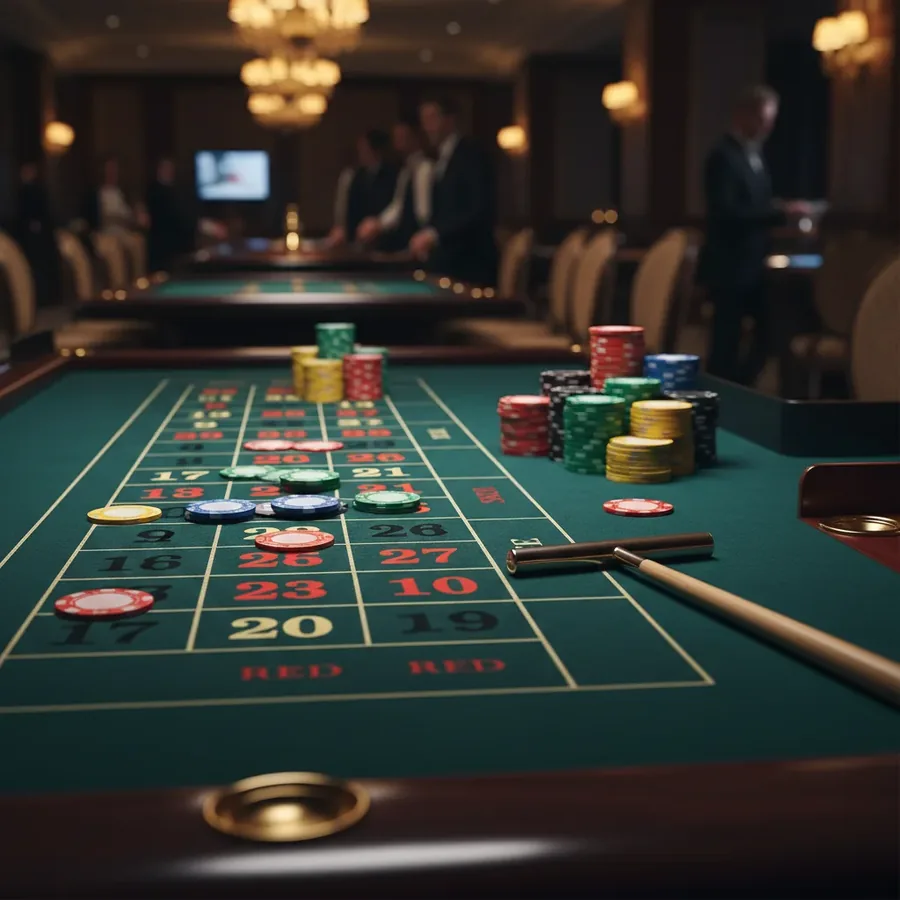
Session Limit 25 Euro and Fixed Number of Rounds
A hypothetical controlled testing session utilizes a strict bankroll limit of 25 EUR to evaluate the longevity of gameplay under standard conditions. When applied to French Roulette featuring La Partage, this budget allows for approximately 46 spins on even-money bets paying 1:1, given the reduced house edge of 1.35%. This extended playtime demonstrates how the specific rule regarding zero refunds impacts the sustainability of a small deposit compared to other variants.
The same 25 EUR capital depletes much faster when played on American Roulette, where the house edge jumps to 5.26% due to the presence of the double zero sector. Even-money bets here only offer a theoretical return of 94.74%, reducing the expected number of rounds to roughly nine before the balance reaches zero. This sharp contrast highlights the financial impact of wheel configuration on short-term session viability without relying on luck or bonus funds.
Bonus wagering requirements further complicate session limits because table games like roulette contribute only 10% toward the turnover obligation for the welcome offer. A 300% bonus up to 2,000 EUR on a 25 EUR deposit creates a massive target that requires substantial volume to clear, effectively extending the necessary playing time far beyond the initial bankroll lifespan. Players must account for this contribution rate when planning their exit strategy.
Step-by-Step to Your First Straight Bet
The first step involves selecting a live dealer table such as Quantum Roulette, where the minimum entry point is set at 0.10 EUR per chip. Players must locate the straight bet area on the digital interface, which covers a single number out of the 37 available sectors on the European wheel. Placing a 1 EUR chip here locks in a fixed payout ratio of 35:1 if the ball lands exactly on that chosen sector.
The second phase requires confirming the bet placement before the croupier halts the betting window, ensuring the wager is registered in the system. Unlike side bets or special features, the straight bet outcome depends solely on the physical position of the ball within the numbered pockets. If the result matches the selection, the system automatically credits 35 EUR plus the original 1 EUR stake to the player's balance.
The final calculation confirms the net profit generated from this single successful event, which amounts to 35 EUR after deducting the initial risk. This high payout ratio compensates for the low probability of hitting a single number, which stands at approximately 2.70% on a European wheel. Understanding this risk-reward dynamic is essential for managing expectations during live sessions.
D'Alembert and Fibonacci Against the Same Table Limit
Applying the D'Alembert progression to French Roulette with La Partage utilizes the 1:1 payout on even-money bets while benefiting from the 1.35% house edge. Starting with a base unit of 1 EUR, a loss increases the next stake to 2 EUR, while a win decreases it to 1 EUR, creating a balanced recovery mechanism. This method relies on the assumption that wins and losses will eventually equalize over a large number of spins, mitigating the impact of the zero refund rule.
The Fibonacci sequence applied to American Roulette faces a harsher mathematical reality due to the 5.26% house edge caused by the double zero sector. Each loss moves the player to the next number in the sequence (1, 1, 2, 3, 5...), requiring exponentially larger stakes to recover previous deficits. With a typical table maximum often limiting these progressions, the higher edge makes recovery statistically improbable compared to the European variant.
Comparing the two strategies reveals that the lower volatility of French Roulette provides a more stable environment for progressive betting systems than American Roulette. The 5.26% edge in the American version accelerates bankroll depletion during losing streaks, whereas the 1.35% edge in French Roulette offers greater resilience. This difference underscores why table selection is critical when employing mathematical betting models.
Wheel Speed and Ball Toss in Real Wheel
The physical mechanics of the real wheel involve a dealer manually tossing the ball against the rotating rim, creating a deterministic yet unpredictable trajectory. In Quantum Roulette, this traditional process is overlaid with digital multipliers that can reach up to 500x on specific numbers before the ball settles. The latency between the ball toss and the final stop determines the duration of each round, typically lasting around 40 seconds including betting time.
Mega Roulette by Pragmatic Play Live maintains similar physical wheel speeds but integrates electronic announcements for the activated Mega Numbers. These numbers, randomly selected from the 37 sectors, receive multipliers between 50x and 500x that apply only to direct straight bets. The visual and auditory cues associated with the ball toss remain consistent, preserving the authentic atmosphere of a land-based casino floor.
The consistency of the wheel speed ensures that players can anticipate the timing of the betting closure relative to the ball's deceleration. Variations in dealer technique do not alter the underlying probabilities, which remain fixed at an RTP of 97.30% for both featured tables. Observers note that the physical randomness of the ball toss complements the digital enhancements without introducing bias into the game outcomes.
Roulette bet types at a glance
| Bet | Payout | Win Chance | Numbers Covered | House Edge |
|---|---|---|---|---|
| Roulette Französisch mit La Partage (gerade Chancen) | Rot/Schwarz 1:1 (bei 0 Rückerstattung 50%), Odd/Even 1:1, Low/High 1:1; Innere Einsätze ohne La Partage: Straight 35:1, Split 17:1, Street 11:1, Corner 8:1 | 98.65% | Bei 0 wird die Hälfte des Einsatzes auf gerade Chancen zurückerstattet (Rot/Schwarz, Pair/Impair, Manque/Passe). En Prison gibt denselben 1,35%. Regel gilt NUR für gleiche Einsätze | 1.35% |
| Roulette Amerikanisch (doppelte Null, 38 Sektoren) | Straight 35:1, Split 17:1, Street 11:1, Corner 8:1, Six Line 5:1, Dozen 2:1, Column 2:1, Rot/Schwarz 1:1 | 94.74% | 38 Sektoren (1–36 + 0 + 00); Auszahlungen wie beim europäischen Rad, aber der zusätzliche Sektor verdoppelt den Hausvorteil | 5.26% |
| Roulette Amerikanisch – Five Number Bet (0, 00, 1, 2, 3) | Five Number 6:1 (deckt 5 von 38 Sektoren) | 92.11% | Einzige Wette am amerikanischen Rad mit Edge über 5,26% – „Fallenwette“. Kein Äquivalent am europäischen Rad | 7.89% |
| Roulette Europäisch (einfache Null, 37 Sektoren) | Straight 35:1, Split 17:1, Street 11:1, Corner 8:1, Six Line 5:1, Dozen 2:1, Column 2:1, Rot/Schwarz 1:1, Odd/Even 1:1, 1-18/19-36 1:1 | 97.30% | 37 Sektoren (1–36 + 0); Auszahlungen wie für 36 Sektoren – daher konstanter Edge auf ALLE Wetten | 2.70% |
| Roulette Französisch, innere Einsätze (La Partage gilt nicht) | Straight 35:1, Split 17:1, Street 11:1, Corner 8:1, Six Line 5:1, Dozen 2:1, Column 2:1 | 97.30% | Rad gleich (37 Sektoren), aber La Partage/En Prison gilt nicht für innere Einsätze – Edge bleibt europäisch | 2.70% |
How the Random Generator Maps 37 Pockets
European Roulette at Slotuna features a wheel with 37 sectors comprising numbers 1 through 36 and a single zero. The house edge remains constant at 2.70 percent across all bet types, including straight bets paying 35:1 and column bets paying 2:1. This uniformity ensures that the theoretical return to player stays fixed regardless of where chips are placed on the layout.
The probability distribution relies on equal sector sizing for each of the 37 pockets without special refund rules for inside wagers. Unlike French variants, La Partage or En Prison do not apply to inner bets, keeping the mathematical advantage steady. Players betting on red or black still receive even money, but the zero pocket dictates the long-term statistical outcome.
Inside wagers such as splits paying 17:1 and corners paying 8:1 face the same 2.70 percent disadvantage as outside options. A six-line bet covering two rows pays 5:1 while maintaining the standard house margin defined by the single zero. This structure prevents any specific bet type from offering better odds than the baseline European rule set.
Live Table vs RNG Table: Rounds per Hour
Quantum Roulette by Playtech operates with betting limits ranging from 0.10 EUR to 5,000 EUR on a 37-sector wheel. Quantum multipliers can reach up to 500x on selected numbers, adding a variable layer to the standard 97.30 percent RTP. The live dealer format introduces human pacing that typically reduces the number of rounds per hour compared to automated software.
Mega Roulette by Pragmatic Play Live offers a slightly different limit structure with stakes between 0.20 EUR and 2,000 EUR. Up to five mega numbers can be assigned multipliers between 50x and 500x, directly impacting potential payout volatility. Direct bets on these enhanced numbers pay 29:1 instead of the standard 35:1 when no multiplier is applied.
Both live tables maintain a base RTP of 97.30 percent, matching the European roulette standard despite the added multiplier mechanics. The presence of a real dealer and physical wheel slows the game cycle, resulting in fewer total spins per session than RNG versions. This lower frequency allows players to manage their bankroll over a longer duration of active play.
How Much Budget Withstands 2.70 Percent House Edge
A starting budget of 100 EUR faces a theoretical loss rate of 2.70 percent per wagered amount in European Roulette. Over a series of bets totaling 1,000 EUR in turnover, the expected statistical deduction amounts to exactly 27 EUR. This calculation assumes perfect adherence to the 2.70 percent house edge across all spin outcomes.
High-stakes tables like Quantum Roulette allow wagers up to 5,000 EUR, significantly accelerating the consumption of this fixed budget. Placing ten maximum bets of 5,000 EUR results in 50,000 EUR in turnover, generating an expected house profit of 1,350 EUR. Such rapid turnover requires a substantially larger initial deposit to sustain gameplay against the mathematical disadvantage.
Comparative analysis shows that American Roulette with its 5.26 percent edge drains funds nearly twice as fast as the European variant. The additional double zero increases the house advantage, making the 2.70 percent edge on European wheels a more favorable option for budget preservation. Players should account for this difference when selecting which table variant supports their financial constraints.
2.70 vs 5.26 Percent House Edge
European Roulette maintains a house edge of 2.70 percent due to its single zero configuration across 37 total sectors. In contrast, American Roulette introduces a double zero, expanding the wheel to 38 sectors and raising the edge to 5.26 percent. This structural difference doubles the casino's statistical advantage over the player on identical bet types.
The Five Number Bet on the American wheel represents the worst possible wager with a 7.89 percent house edge and an RTP of 92.11 percent. Covering sectors 0, 00, 1, 2, and 3, this specific bet pays 6:1 but suffers from a significantly higher disadvantage than any other option. No equivalent high-edge bet exists on the European wheel, making it a unique trap for American players.
Straight bets on both wheels pay 35:1, yet the underlying probabilities differ due to the extra pocket in the American version. A winning straight bet on European Roulette occurs roughly once every 37 spins, whereas the American version requires 38 attempts for the same frequency. This discrepancy directly translates into the 2.56 percent gap in overall profitability between the two formats.
Which Tables are Blocked with Active Bonus
The 300 percent welcome bonus up to 2,000 EUR comes with specific contribution rules for different game categories. Table games, which include all roulette variants reviewed, contribute only 10 percent toward fulfilling the wagering requirement. This low contribution rate means players must wager significantly more to clear the bonus conditions compared to slot games.
Playing Quantum Roulette or Mega Roulette with an active bonus accelerates the turnover needed to unlock withdrawals due to the 10 percent contribution cap. For instance, a 1,000 EUR bet on these tables counts as only 100 EUR toward the required turnover volume. Players must therefore generate ten times the actual bet amount in gross gaming revenue to satisfy the terms.
Bonus funds restrict access to certain high-variance strategies since the effective wagering burden is inflated by the reduced contribution percentage. The 2.70 percent house edge combined with the 10 percent table game contribution creates a compounded difficulty for bonus clearance. Players should calculate their total required turnover based on this ratio before committing real funds to live tables.
10 Percent Roulette vs 100 Percent Slots
Table games contribute only ten percent toward the wagering requirement for the 300% welcome bonus up to €2,000 plus 100 free spins. This low contribution rate means that every euro spent on live dealer tables counts as merely ten cents of progress. Players must generate significantly higher turnover to clear the bonus compared to slot players. Consequently, the required volume increases by a factor of ten for roulette bets.
European Roulette offers a house edge of 2.70 percent, which is relatively low for table games. American Roulette carries a much higher edge of 5.26 percent due to the double zero sector. Quantum Roulette from Playtech features multipliers up to 500x but maintains the standard European wheel structure. These varying edges directly impact the speed at which the player bankroll depletes during the conversion process.
The bonus terms require meeting specific turnover conditions before any withdrawal can be processed. Since table games only count ten percent, a bet of 100 euros contributes just ten euros to the total. This rule applies uniformly across all live dealer options like Mega Roulette and Quantum Roulette Live. Players should calculate their total required bets carefully to avoid exceeding time limits or budget constraints.
House Edge: What 2.70 Percent Actually Costs
European Roulette features thirty-seven sectors including a single zero, resulting in a house edge of 2.70 percent. This edge remains constant across all bet types, from simple chances to internal straight bets. The Return to Player percentage stands at 97.30 percent for these standard wagers. Over thousands of spins, this mathematical advantage ensures the casino retains a predictable portion of the total handle.
American Roulette contains thirty-eight sectors with both a single and double zero, raising the house edge to 5.26 percent. This higher edge makes the Five Number Bet particularly expensive, carrying an edge of 7.89 percent. The payout for this specific bet is six to one, covering five sectors instead of the usual odds. It is the only wager on the American wheel with such a significant disadvantage for the player.
French Roulette with La Partage reduces the edge on even money bets to just 1.35 percent. When zero appears, half of the stake on Red/Black or Odd/Even is returned to the player. Internal bets do not benefit from this rule and retain the standard 2.70 percent house edge. This distinction makes French variants highly favorable for players focusing on outside wagers rather than complex combinations.
How Much to Bet for 10 Percent Contribution?
The welcome bonus offers three hundred percent up to two thousand euros plus one hundred free spins. To convert this bonus, players must meet the wagering requirements through eligible game contributions. Table games like Roulette contribute only ten percent toward the total turnover requirement. This means that betting one hundred euros on a live table adds only ten euros to the cleared amount.
Quantum Roulette from Playtech allows bets ranging from zero point ten euros to five thousand euros per round. With a minimum stake of zero point ten euros, clearing a large bonus requires many more spins than slots. The presence of quantum multipliers up to five hundred times does not change the ten percent contribution rate. Players must account for this slow accumulation when planning their session length and budget allocation.
Mega Roulette by Pragmatic Play Live supports stakes between zero point twenty euros and two thousand euros. The fifty to five hundred times multipliers apply to direct bets on one to five numbers. Despite the high volatility potential, the game still falls under the ten percent contribution category for bonuses. Players needing to clear funds should consider whether the slower progression aligns with their financial strategy.
When is it Worth Switching to French Roulette?
French Roulette offers a lower house edge of 1.35 percent on even money bets using the La Partage rule. This benefit applies only to Red/Black, Odd/Even, and Low/High wagers where the payout is one to one. If zero hits, the player loses only half their stake instead of the entire bet. This rule significantly improves the long-term expected value for conservative betting strategies.
Internal bets in French Roulette do not qualify for the La Partage reduction and keep the 2.70 percent edge. Straight bets pay thirty-five to one, while splits pay seventeen to one without any refund mechanism. Corners and streets maintain their standard payouts of eight to one and eleven to one respectively. Players targeting high-variance outcomes should stick to European wheels where the rules are identical but simpler.
Quantum Roulette and Mega Roulette lack the La Partage feature entirely, reverting to the standard 2.70 percent edge. These variants focus on multiplier enhancements rather than reducing the base house advantage. The multipliers in Quantum Roulette reach up to five hundred times on selected numbers. Switching to French style is only beneficial if the player strictly avoids internal bets and relies on outside wagers.
Mobile Tables: Which Betting Fields Become Smaller
Quantum Roulette Live by Playtech displays its betting grid on mobile devices with adjusted field sizes. The interface must accommodate multipliers up to five hundred times on a smaller screen real estate. Bets range from zero point ten euros to five thousand euros, requiring clear visibility of limits. The layout prioritizes the main number grid while condensing secondary bet areas to fit vertically.
Mega Roulette from Pragmatic Play Live adapts its interface for smartphones with stakes between zero point twenty and two thousand euros. The five mega numbers with multipliers appear prominently but take up less horizontal space than desktop versions. Direct bets paying twenty-nine to one remain accessible but require precise tapping due to reduced target areas. The visual hierarchy ensures critical multiplier information is never obscured during fast-paced gameplay.
European Roulette tables typically show thirty-seven sectors with consistent spacing for all bet types. On mobile, the dozen and column bets may become narrower to preserve the central number grid. The house edge of 2.70 percent remains unchanged regardless of the device used for access. Players should test the touch sensitivity of external bets before committing significant stakes to avoid misregistration errors.
Contact
Live - online chat
Banking









Providers












Slotuna Casino 2026